Látnivalók Jordániába
Apr 2010 (annual)
The Amman Dead Sea Ultra Marathon is a grueling test of endurance. The competitors begin at the high elevations of Amman and make their way down to the lowest point on Earth, in the desert of southern Jordan.
The race begins at 900 meters above sea level and ends 50 kilometers later at around 400 metres below sea level (yes, that's a difference of 1300 meters). It is actually divided into three events: the half marathon of 21km, the standard marathon which is 42km and the ultra-marathon, topping the bill at 52 hot kilometers along tarmac roads with no shade!
Runners can take part individually or within a team of four. If you are not of peak fitness, possessed of a steely will and vaguely acclimatized to the temperature, it's probably best to observe rather than compete.
The marathon is a fund raising event co-organized by the Society for Care of Neurological Patients (SCNP) and the Amman Road Runners.
Amman International Theatre Festival
Apr 2010 (annual)
Amman
This annual festival is the only one in the Middle East and North Africa to be organized by an independent theatre company. Performances are mainly in Arabic and English.
Jordan International Rally
May 2010 (annual)
Jordan
The new-look Jordan International Rally entails sensational stages in and around the Jordan Valley and within the Roman forests, providing challenging routes both above and below sea level.
Distant Heat
Jul 2010 (annual)
Aqaba
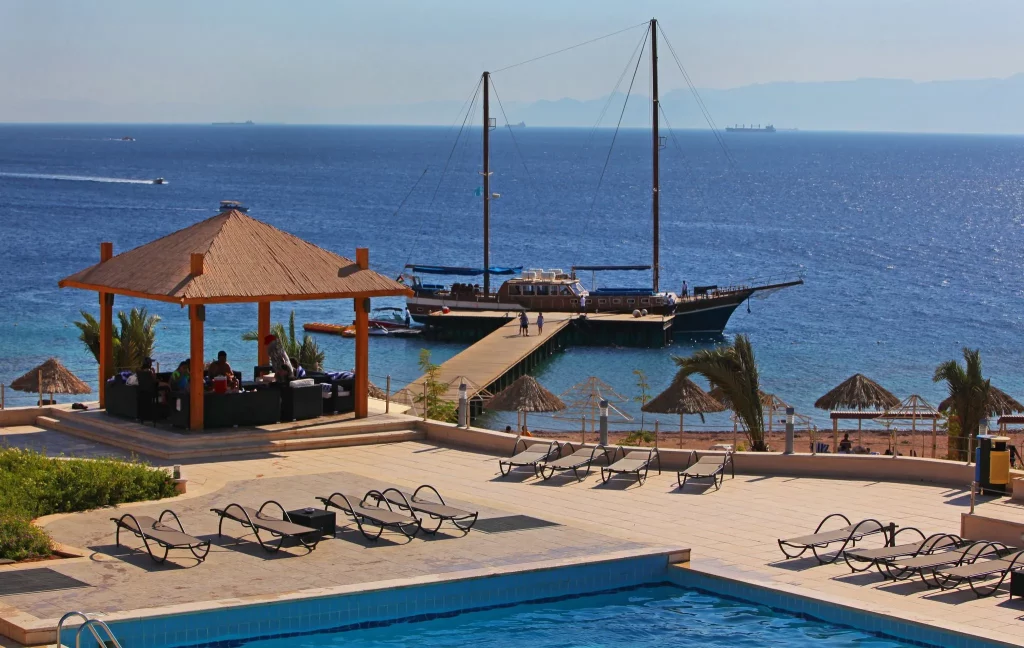
Distant Heat is an annual concert and dance festival held at two venues in Jordan. The fun begins with an all-night party of electronic dance music in Wadi Rum, within the magnificent Jordanian desert.
The festival continues the following day with beach and pool parties at the Red Sea resort town of Aqaba, just 40 kilometers away. In 2007 the event featured Above & Beyond, Dave Seaman, BB and many international DJs.
Entrance fees include a number of drinks, dinner and breakfast. For a small additional fee, visitors can hire tents and camp overnight. Transportation between the two venues is provided.
Jerash Festival of Culture and Arts
Jul - Aug 2010 (annual)
Jerash
Jerash is one of the most famous, well-preserved, and provincial Roman cities in the world. Since 1980, it has been hosting this major international festival.
The North and South Theatres, the steps of the Artemis Temple, the Arena Hall and other venues, all located in the old city within walking distance of modern Jerash. They are used for festival performances of dance, music, theatre and poetry by artists from around 30 countries.
Ramadan and Eid al-Fitr
Sep - Oct 2010 (annual)
Jordan
The month of Ramadan is celebrated in Jordan as it is also treated in Muslim countries throughout the world. Ramadan rituals include fasting and the spectacular banquet-feast of Eid-al-Fitr . This feast comes at the end of Ramadan , when families come together to celebrate the end of the fast, give each other presents and generally breathe sighs of relief that they can eat during the day again.
The month of Ramadan is, in theory, an opportunity for the Muslim to show his religious commitment and grow closer to God, by depriving himself of the sensual pleasure of food and directing his thoughts to the transcendent, to Allah. It is a time for spiritual exercises, prayer and spiritual communion, whether in Mosques or in the home.
The rules governing the Ramadan fast are simple. According to the Quran, you can eat and drink freely during Ramadan, "until you can plainly distinguish a white thread from a black thread by the daylight: then keep the fast until night." What this means in practice is enormous breakfasts, night-time food markets and sunset feasts.
According to tradition, the merit accumulated through keeping the fast can be destroyed by the five following acts (which are prohibited during the rest of the year too, but which are especially condemned during Ramadan): the telling of a lie, slander, denouncing someone behind his back, a false oath, and greed or covetousness. These ethical strictures reflect the moral character of the fast, the fact that it is not torture or punishment but an instrument to sharpen the individual's perceptions of the Divine and organize the scattered everyday thoughts of mundane life.
Jordanians can be a bit testy during Ramadan, not an unnatural consequence of going about your daily business without food or drink, so thread a bit carefully. Most importantly, make sure you abide by the restrictions on consumption imposed by the fast, as breaking these is offensive at best, and can lead to severe penalties!
Also, be wary of the fact that the end of Ramadan (and the beginning of the three-day Eid-al-Fitr festival) generally depends not on the astronomical lunar cycle, but rather on the first sighting of the moon in the sky by a human being. Thus the precise date can vary by one or two days according to whether the sky is clouded or clear.
Jerash
Daily
Jerash
Jerash is one of the most famous and well-preserved Roman provincial cities in the world. Highlights include a colonnaded street, the cathedral, the Artemis Temple, the Oval Plaza, Hadrian's Arch and the Nymphaeum. The South Theatre, North Theatre and the steps of the Artemis Temple are all used for dance, music and theatre performances during the annual Jerash Festival.
The Roman Army and Chariot Experience
Daily; not Tue
Jerash Hippodrome, Jerash
This internationally acclaimed show consists of some 40 fully-equipped gladiators engaging in ancient battle tactics, fighting and competing in chariot races. Held at the recently-restored Jerash Hippodrome, also known as Circus Gerasa, the event offers visitors an authentic replica of the spectacle that used to take place nearly 2000 years ago. Audience participation is expected and the fate of the loser is decided by giving the thumbs up or down.
Petra
Daily
Petra
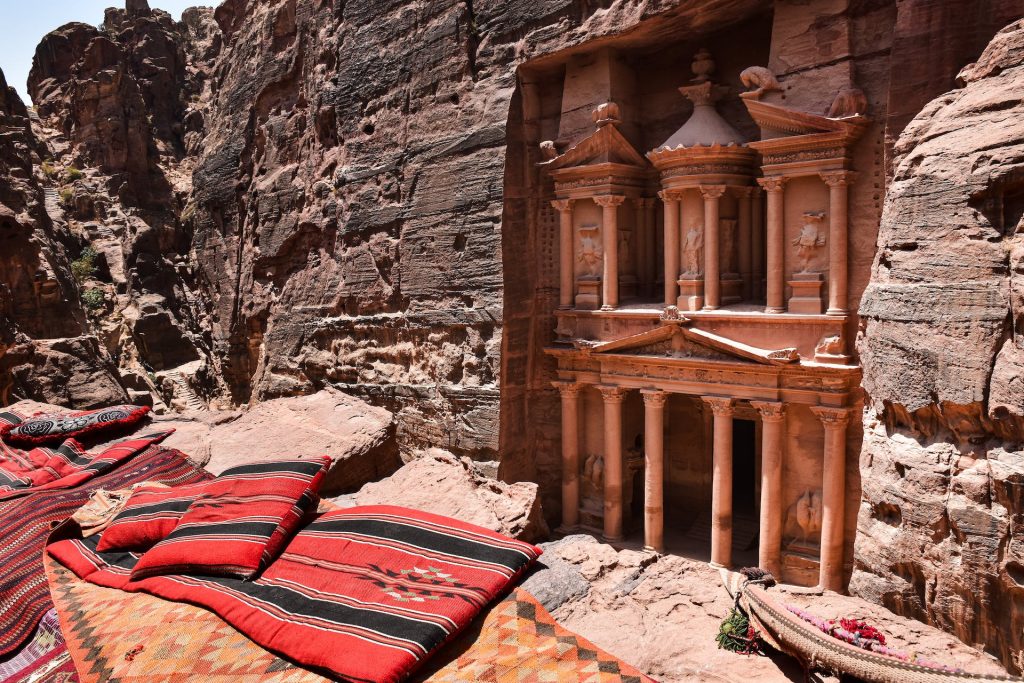
Petra is a stunning city carved from a cliff face. Both a UNESCO World Heritage Site and a world-renowned monument. It is one of those wonders that make you think about how little we seem to have progressed since ancient times.
You're not going to be alone when you visit Petra, but it's easy to forget other tourists when faced with such an awesome monument to civilizations past. Spend some time here and watch the colors change with the light.
Wadi Rum
Daily
Wadi Rum
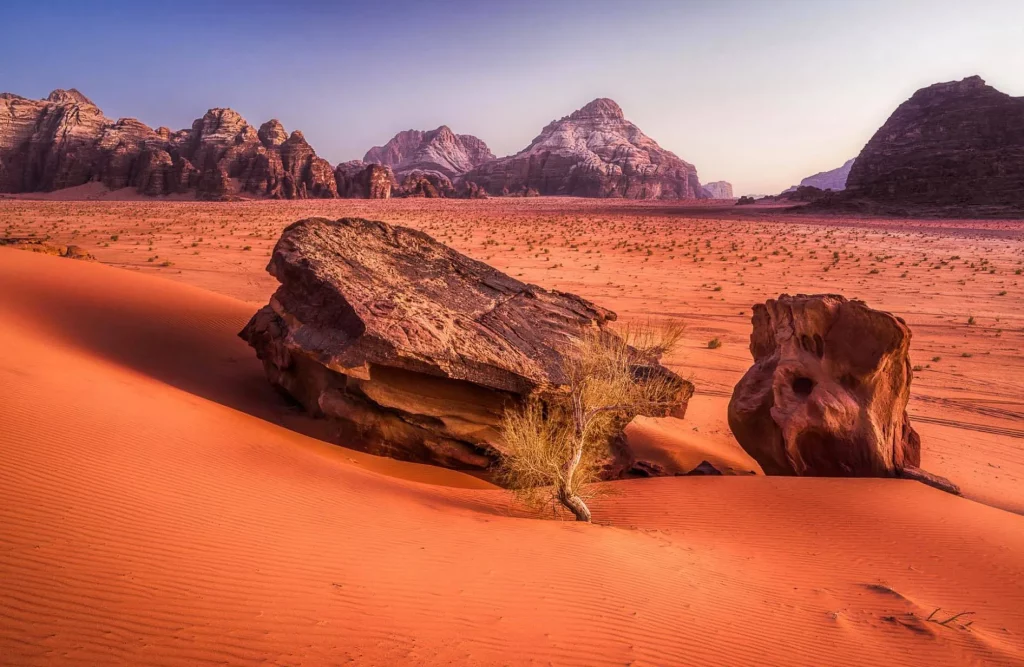
Lawrence of Arabia developed a huge thirst for lemonade there, and Bedouins make it their home. The magnificent lunar landscape of Wadi Rum is an eerie yet truly magical corner of the Arab world.
Roman Theatre
Daily
Roman Theatre, Amman
Amman's Roman Theatre is the most impressive legacy of the Roman Philadelphia and was built under Antonius Pius (138-161AD). Cut into the rock of the hill, it once seated 6000 people for performances and is also thought to have had religious significance for the city dwellers. It is still used today for theatrical and musical productions.
The area around the amphitheatre is also home to two small but quite interesting museums: the Museum of Popular Tradition and the Folklore Museum.
Jordan Archaeological Museum
Daily
Jordan Archaeological Museum, Amman
Situated on Amman's Citadel Hill, this small museum has an excellent collection of Jordanian antiquities, dating from prehistoric times to the 15th century.
Dead Sea
Daily
Dead Sea
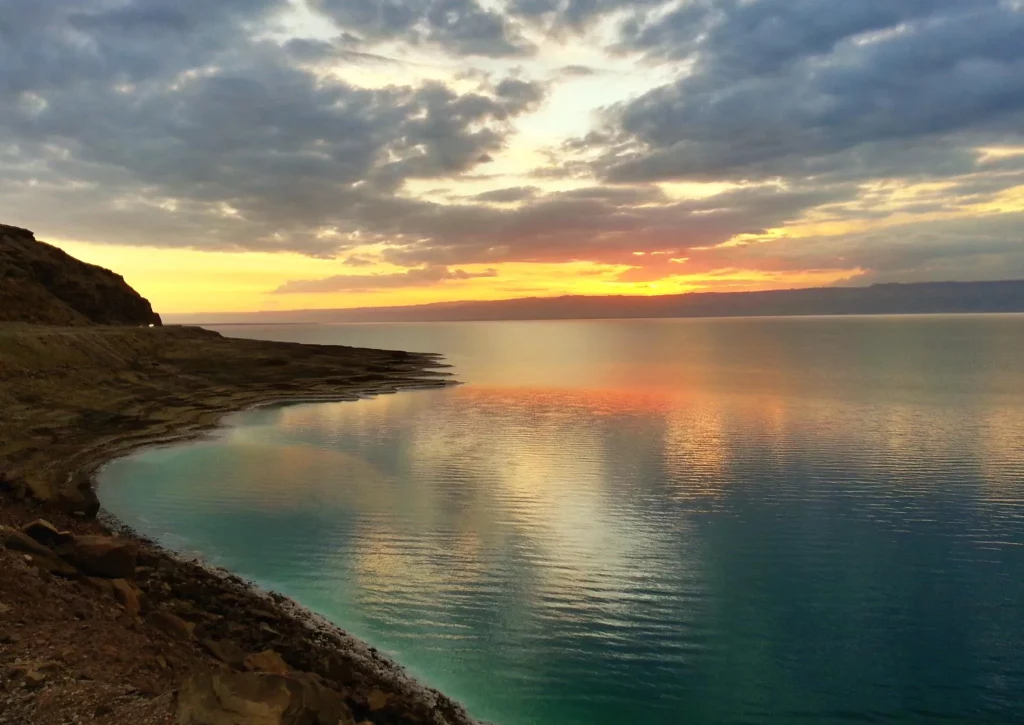
The Dead Sea is the lowest place on Earth, at around 400 meters below sea level, depending on the season. A vast expanse of water, it receives a number of incoming rivers, including the River Jordan, which then has nowhere else to go. High temperatures lead to evaporation that leaves behind a rich cocktail of salts and minerals. Visitors bathe in the warm super-salty and incredibly buoyant water to relax. The area is believed to have been home to five Biblical cities: Sodom, Gomorrah, Adman, Zebouin and Zoar.
Jordan National Gallery of Fine Arts
Daily; not Tue or Fri
Jordan's National Gallery of Fine Arts in Amman hosts a superb collection of paintings, print, sculptures, photographs, installations and ceramics by contemporary Jordanian and international artists. It aims to encourage cultural diversity, increase artistic knowledge and promote art from the Islamic and developing worlds.
Since it was founded by the Royal Society of Fine Arts in 1979, the gallery has greatly expanded and it now boasts around 2000 pieces of work by more than 800 artists from a number of countries. Lectures, seminars, workshops and other activities such as concerts and poetry readings are also held here.
Citadel
Daily
Citadel, Amman
The Citadel towers over Amman, offering some terrific views. Numerous excavations have revealed the remains of fortifications in the area from the Middle Bronze Age, the Iron Age, Hellenistic, late Roman and Arab Islamic Ages.
Three important structures can be viewed from the Citadel. The Temple of Hercules was built between 161-169AD, during the reign of Marcus Aurelius and Lucius Verus, and is currently subject to a restoration programme.
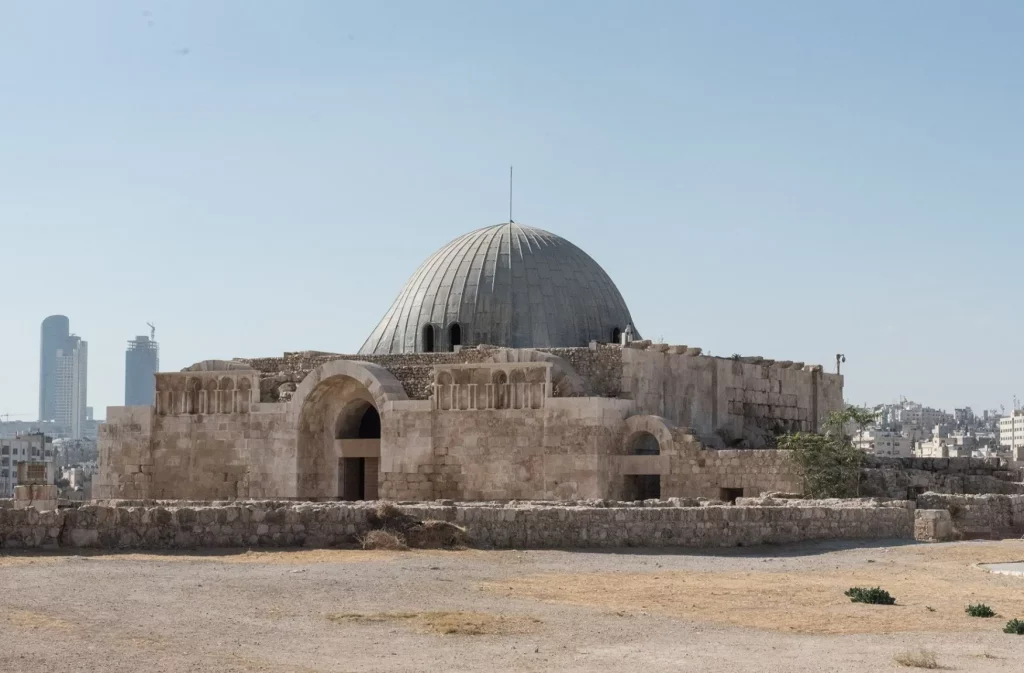
The Omayyad Palace is an impressive structure dating back to around 720AD and the rule of the Omayyad Arabs. Its exact function is unclear, but the building includes a monumental gateway, cruciform audience hall and four vaulted chambers. A colonnaded street runs through the complex and to the north and east, ruins of the palace grounds are visible.
Lastly, the site of a Byzantine church, dating back to the 6th or 7th century, can be seen on the Citadel, marked by Corinthian columns.
Mount Nebo
Daily
Mount Nebo
Mount Nebo is an elevated ridge in western Jordan standing 817 meters above sea level. From the summit there are panoramic views of the Holy Land and the valley of the River Jordan. Jericho and Jerusalem are visible on very clear days. According to the Bible, Mount Nebo is where the Hebrew prophet Moses was given a view of the Promised Land that God was giving to the Hebrews. Jewish and Christian traditions believe that Moses was buried on this mountain by God himself, while Islam believes that Moses was buried a few kilometers west, somewhere beyond the River Jordan. The serpentine cross sculpture at the top was created by Italian artist Giovanni Fantoni.
Grand Husseini Mosque
Daily
Grand Husseini Mosque, Amman
Built in striking pink and white stone by the late King Abdullah, the Grand Husseini Mosque in downtown Amman was restored under the direction of the late King Hussein in 1987. The original mosque on this site was built in 640AD by Omar Ibn al-Khattab, the second Caliph of Islam.
Jordan Folklore Museum
Daily
Jordan Folklore Museum, Amman
Amman's Folklore Museum, located at one end of the Roman Theatre, recreates traditional Jordanian life. Costumes, home furnishings, musical instruments and handicrafts dating back to the 19th century are all on display. Other notable exhibits include a Bedouin goat-hair tent with rug weavings and household equipment, plus replicas of traditional domestic interiors.
Gold Souk
Daily
Gold Souk, Amman
If you're in the market for gold jewelry, head to Amman's Gold Souk where you can pick up a wide range of goods with both Western and Oriental influences. More than 50 shops sell items such as necklaces, bracelets and even gold coffee pots.
Jordan Museum of Popular Tradition
Daily; not Tue
Jordan Museum of Popular Tradition, Amman
The Jordan Museum of Popular Tradition, located in the eastern section of the Roman Theater in Amman, displays the traditional costumes of Jordanian people, including some beautiful embroidery, antique jewelry and domestic utensils. It also houses a good collection of mosaics from Madaba and Jordan's less-famed Byzantine churches.
Qusayr Amra
Daily
Qusayr Amra is the best-preserved of Jordan's desert castles. Constructed during AD 712 and AD 715 as a bath house, the building consists of three long halls with vaulted ceilings. Its plain exterior belies the beauty inside. The ceilings and walls are decorated with frescoes depicting caliphs and rulers of the day. Other representations include animals, interesting to be watched, because illustrations of living beings were prohibited after the advent of Islam. The domed ceiling of the steam room is decorated with a fresco of a map of the heavens, while the bathrooms have fine mosaic floors.